
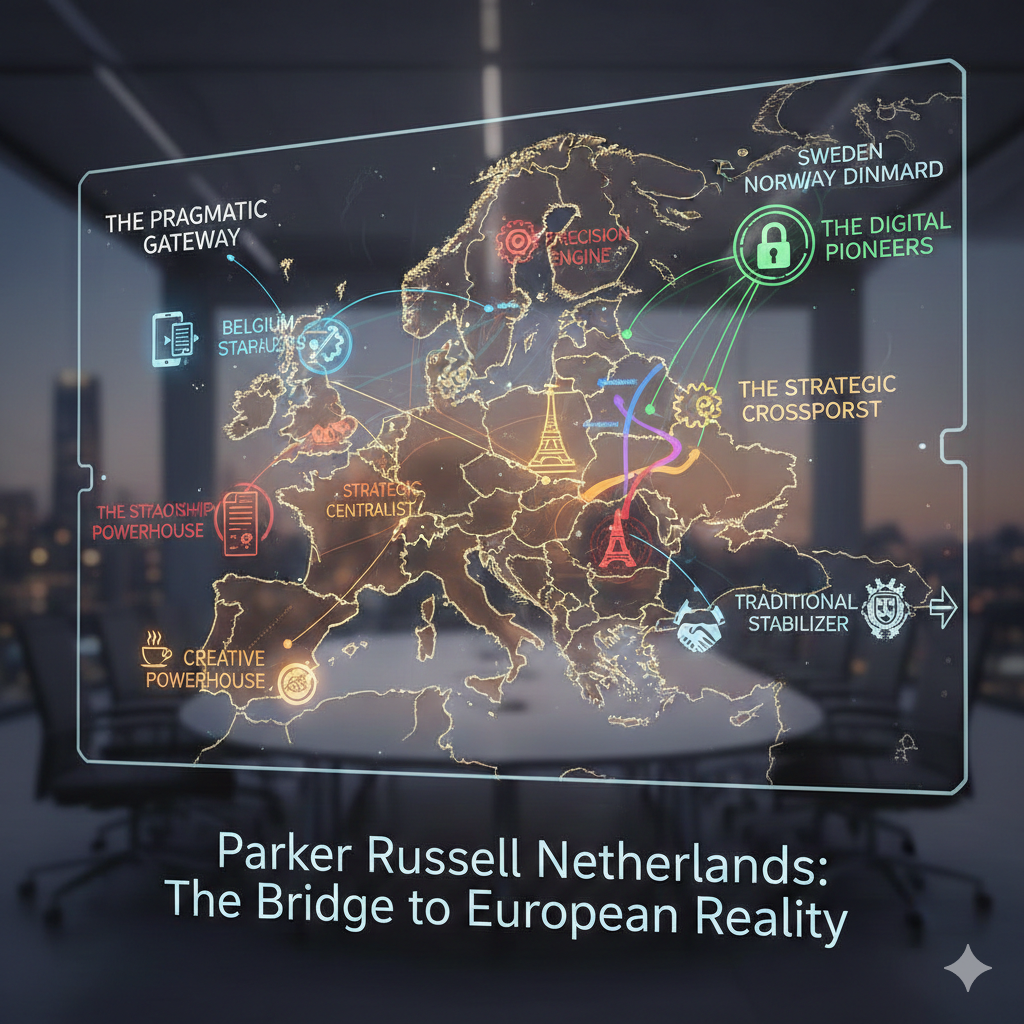
Expanding your business across Europe isn’t just a matter of logistics; it’s an exercise in cultural intelligence. While the European Union offers a “Single Market,” the reality for an entrepreneur is far more complex. From the digital-first boardrooms of Stockholm to the relationship-driven offices of Milan, success depends on closing the Cultural Efficiency Gap.
At Parker Russell Netherlands, we specialize in more than just numbers. We navigate the nuances. Here is our strategic audit of the European entrepreneurial landscape.
The Netherlands: The Pragmatic Gateway
-
Business Climate: Highly efficient and transparent. The Dutch value directness and speed.
-
Digitalization & Bureaucracy: Globally leading. Almost all administrative tasks (the “red tape”) are handled digitally.
-
Taxation: Moderate to competitive, with a sophisticated network of tax treaties.
-
English Proficiency: Exceptionally high. English is the de facto second language in business.
Germany: The Precision Engine
-
Business Climate: Respect for hierarchy and process. Quality and “Ordnung” (order) are non-negotiable.
-
Digitalization: Surprisingly traditional. Germany still relies heavily on physical documentation and formal signatures.
-
Taxation: Complex and high, but provides access to the largest consumer market in Europe.
-
English Proficiency: Good in major hubs, but German remains the language of trust and contracts.
Scandinavia: The Digital Pioneers (Sweden, Norway, Denmark, Finland)
-
Business Climate: Flat hierarchies and a high focus on sustainability and innovation.
-
Digitalization: The gold standard. Paperwork is virtually non-existent; everything is linked to a digital ID.
-
Taxation: High corporate and personal taxes, but offset by world-class infrastructure and ease of doing business.
-
English Proficiency: Flawless. You can build an empire here without speaking a word of the local tongue.
Belgium: The Strategic Crossroads
-
Business Climate: A complex mix of Flemish (efficiency-driven) and Walloon (relationship-driven) cultures.
-
Digitalization: Improving, but the country’s federal structure can make paperwork feel like a labyrinth.
-
Taxation: Notably high labor costs and taxes, requiring sophisticated financial structuring.
-
English Proficiency: High in Brussels and Flanders; French is essential in the south.
France: The Strategic Centralist
-
Business Climate: Highly formal. Success is built on long-term relationships and a deep respect for French business etiquette.
-
Digitalization: Rapidly catching up, though the infamous French bureaucracy still requires a local expert to navigate.
-
Taxation: High, but with significant R&D incentives and government support for “La French Tech.”
-
English Proficiency: Improving, but business is conducted in French. Showing effort in the local language is a sign of respect.
Spain: The Relationship Market
-
Business Climate: Business is personal. Meetings often start with coffee and end with dinner; trust is earned before contracts are signed.
-
Digitalization: Moderate. Recent years have seen a digital push, but local “Gestorías” (administrative agencies) are still vital.
-
Taxation: Competitive corporate rates, though the regional variations can be tricky.
-
English Proficiency: Moderate. In major cities, you’ll manage, but local presence is key for real growth.
Italy: The Creative Powerhouse
-
Business Climate: Entrepreneurship is in the Italian DNA, but it is often family-centric and decentralized.
-
Digitalization: Italy has made huge strides in mandatory electronic invoicing, but the legal system remains slow.
-
Taxation: High and famously complex. Navigating the Italian fiscal landscape requires an expert guide.
-
English Proficiency: Variable. In the industrial North, English is common; elsewhere, personal connections outweigh language.
Austria: The Traditional Stabilizer
-
Business Climate: Similar to Germany but with a more formal, traditional etiquette. Titles and credentials matter here.
-
Digitalization: Good, though there is a strong preference for formal, documented processes.
-
Taxation: Solid and predictable. It serves as the perfect stable bridge to Eastern European markets.
-
English Proficiency: High, particularly in the financial and tech sectors of Vienna.
Conclusion: Don’t just expand. Integrate.
Expansion is the ultimate test of a company’s Enterprise Value. Those who treat Europe as a single block will fail. Those who understand that Germany needs a signature, Sweden needs a login, and Italy needs a lunch, will thrive.
At Parker Russell Netherlands, we are the bridge between your ambition and European reality. We handle the paperwork, the tax structuring, and the cultural intelligence so you can focus on building your empire.
Ready to cross the border? Let’s design your international roadmap.